

Knowledge Gaps
A knowledge gap means the bot didn't have the information the user asked for.
Knowledge Gap rate = conversations with a gap ÷ evaluated conversations × 100
Tooltip: "% of conversations where the bot lacked information to answer". Lower is better — a falling trend line is a good one.
You'll find it in Overview → Health, Overview → AI Impact, and Performance → Knowledge Gaps by Topic and Article Performance.
What counts as a gap — and what doesn't
This distinction is precise, and it is what makes the metric usable.
It IS a gap when the bot clearly doesn't have the general information requested and answers "I don't know", or refuses without any useful guidance.
It is NOT a gap when the bot provides the information — or when the bot cannot access personal or real-time data but sends the user to a valid, relevant place where they can get it.
That second half is the important one. Compare:
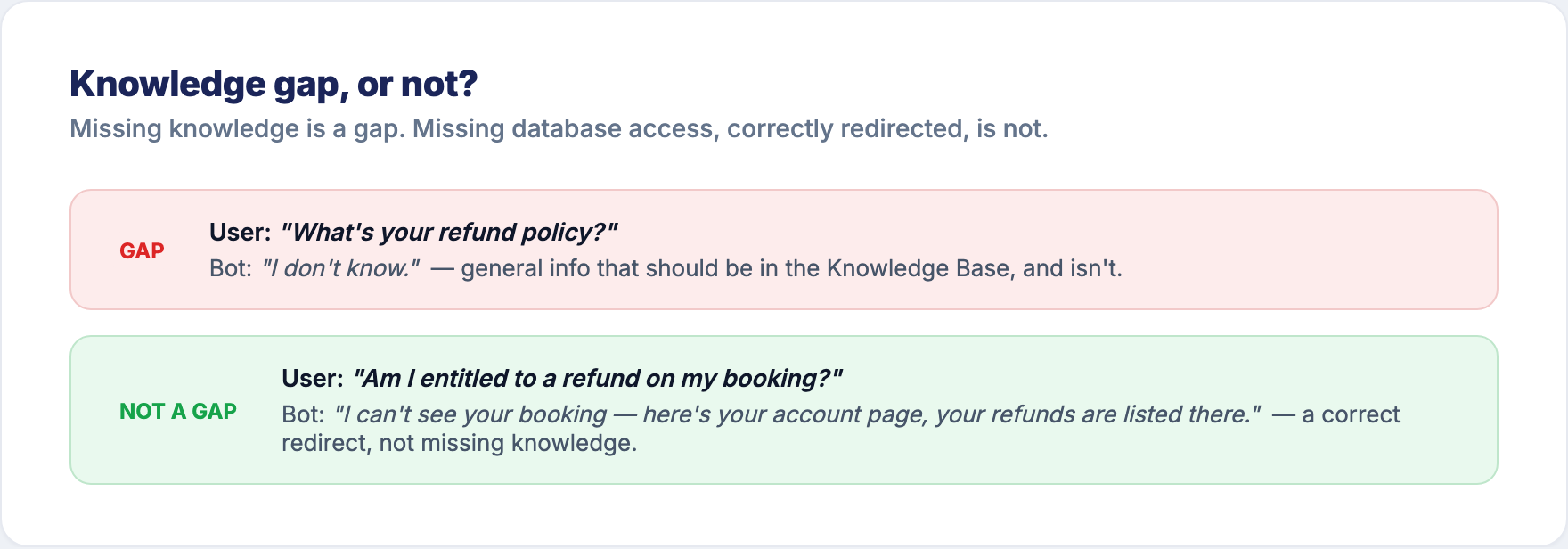
Correct redirections for personal or dynamic information are not knowledge gaps. The metric measures missing knowledge, not missing database access. That's why it stays clean enough to act on.
Why was this one flagged as a gap?
You can check every verdict. In the conversations panel, a conversation carrying the Knowledge gap tag explains itself: hover the tag and the evaluator tells you what it was missing and why it concluded there was a gap.
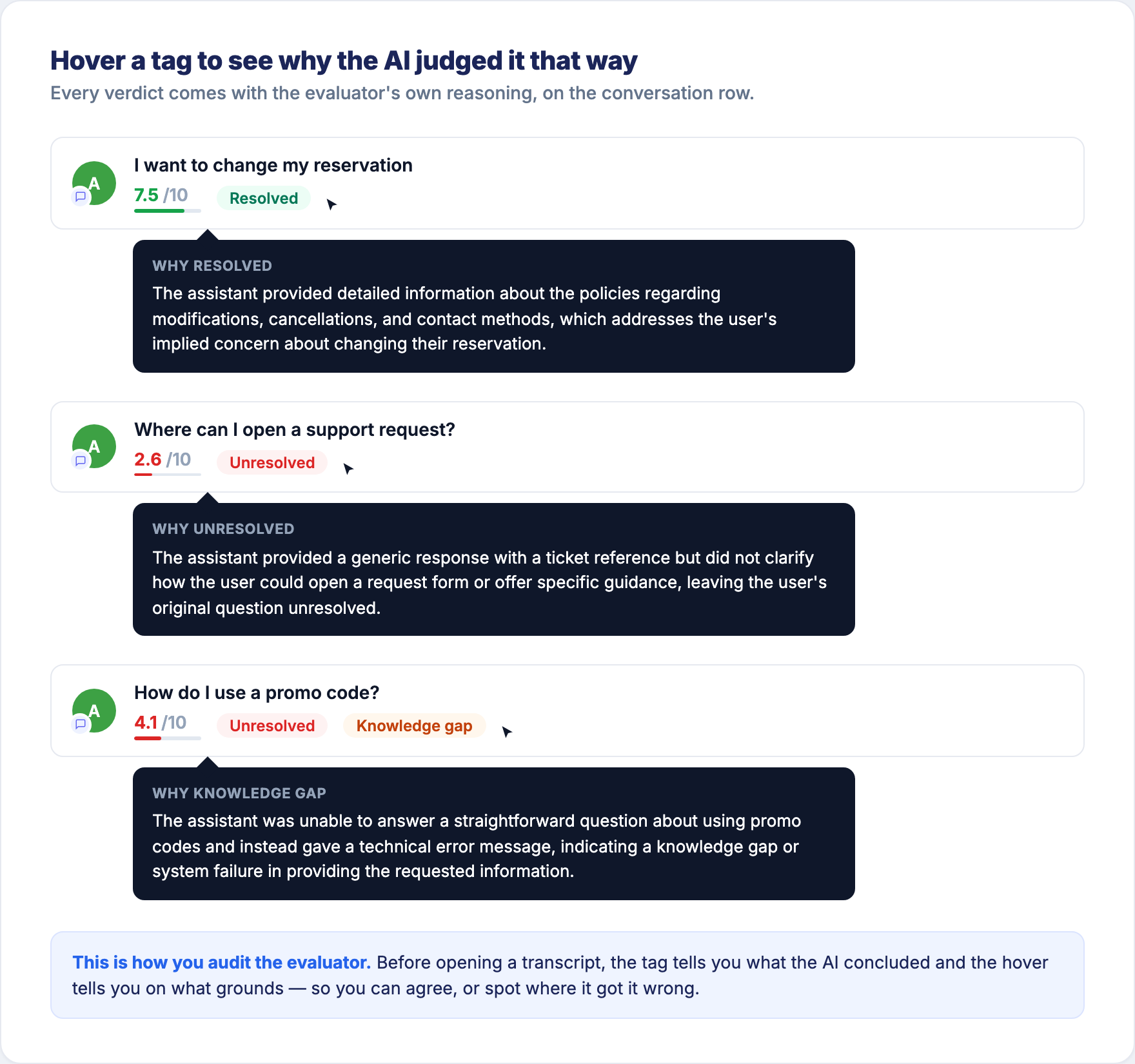
It is the quickest way to confirm a real content gap before you go and write the article.
How to read the number
Read the gap rate roughly like this: under 15% is healthy, 15–30% deserves attention, 30% and above means almost one conversation in three hits a wall — that's a content emergency on that topic.
Knowledge gaps tell you why
Of the four things the evaluator produces, this is the one that most often converts directly into work you can do this week.
- Resolution tells you that something failed. The cause could be anything: missing content, a flow that dead-ends, a question the bot never understood, a request the bot was never meant to handle.
- A knowledge gap tells you why. Information was missing. That's a specific, fixable problem with an obvious owner.
The fix is usually direct: add or improve the content in your Knowledge Base. Louis answers from what's in the Knowledge Base. If it isn't in there, he can't say it. A topic with a high gap rate is a shopping list of articles you haven't written yet.
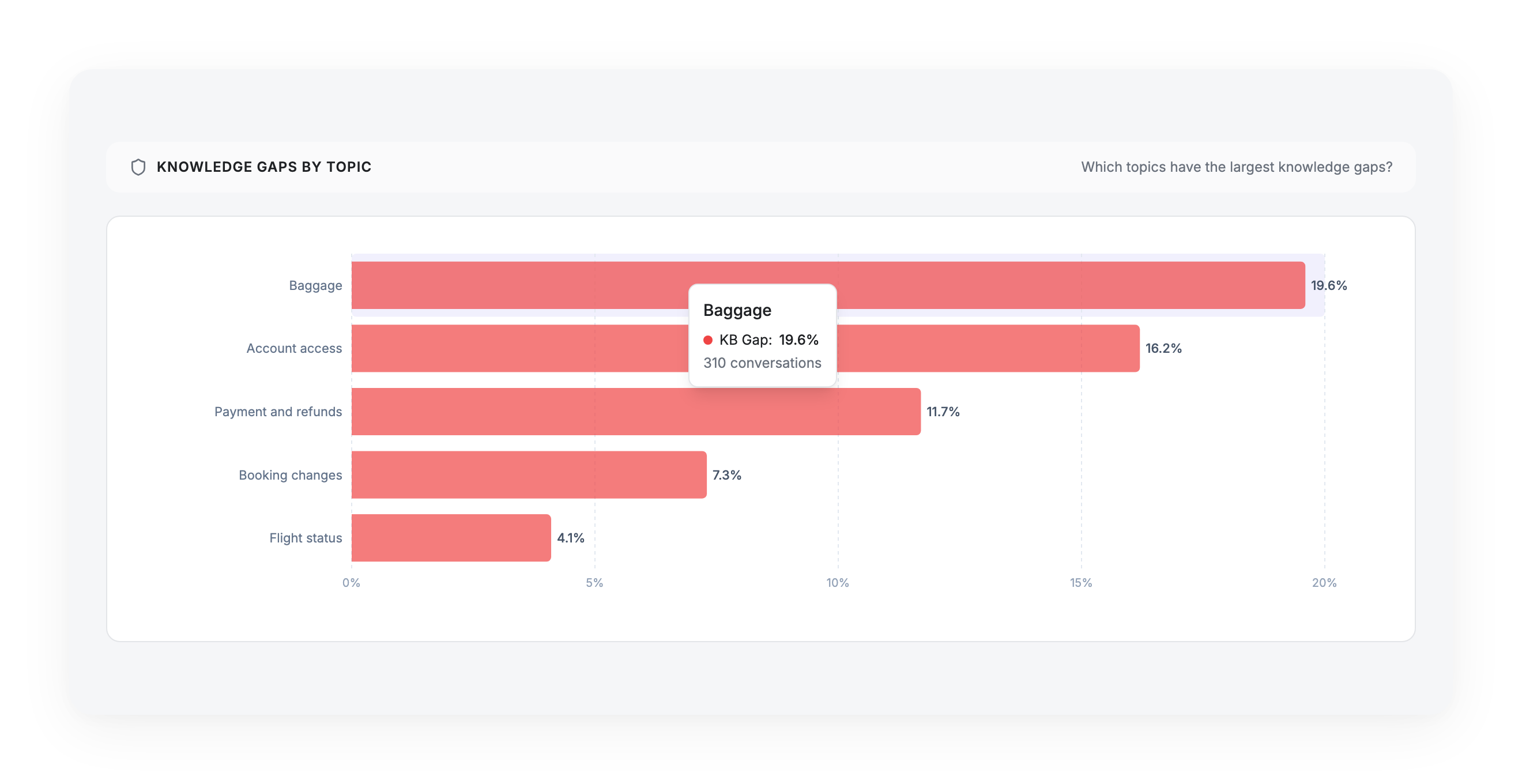
Performance → Knowledge Gaps by Topic shows you where the gaps concentrate. Article Performance shows how existing articles are doing. Both live on the Performance report.
It points at the subject, not the article
A knowledge gap is not automatically linked to a specific missing article — the system can't write your content for you. It tells you which topic is bleeding. To find out exactly what's missing, drill into the conversations and read what people were actually asking. That reading takes about fifteen minutes, and it usually produces a very precise to-do list.
Now act on it
To turn a high-gap topic into concrete Knowledge Base work, follow How to reduce your knowledge gaps.
Updated 3 months ago